
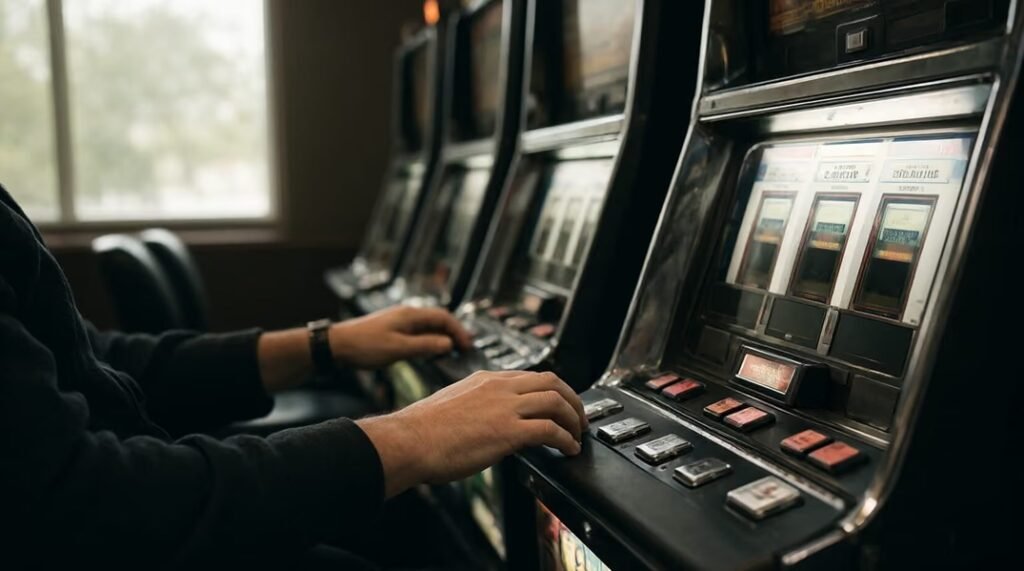

Habitual players have a preference, such as a known design, easy controls or a favorite game theme, before playing a slot. When those selections become a cause for outcomes, pattern seeking starts. After a pause, a payout may make the pause appear significant. Multiple spins of the same type may indicate a pattern. The difference between a personal preference, a remembered coincidence and a documented game feature can help shed light on those impressions.
Separate familiar preferences from result predictions
Returning to a familiar game can make its interface easier to use. The symbols are recognizable, the controls are in expected places, and the payout display takes less effort to read. Those are practical reasons for a preference. They explain why someone chooses a title without establishing that the choice improves the chance of a particular result.
When browsing slots on this website, separate the appeal of a game from claims about how it behaves. Artwork and presentation explain its style. The individual game’s instructions explain its mechanics. A familiar title might feel more predictable because its animations are easier to recognize, but recognizing an animation is different from knowing which result will appear next.
Why recent results can look like a sequence
Having a short sequence of results provides the brain with a great deal to arrange. Any symbols that repeat will catch the eye, alternating combinations will appear neat, and multiple winning combinations, when they appear in quick succession, become a timing situation. But there can be runs and repeats in random sequences. Randomness doesn’t mean that the wins and nonwinning outcomes have to alternate in an orderly fashion, and it doesn’t mean they have to occur at regular intervals.
When people talk about winning streaks in slots, it typically describes something they have already experienced. Evidence of the game – not just the sequence itself – is required to make a forecast. Previous outcomes do not make a winning outcome due in a game setting with independent spins and the rules remain the same. For some games, there are documented features that carry forward the current state, so the question is, has a documented feature changed the current state?
How Personal Choices Can Feel Like Control
Allowing players to make choices about a title, sound or even when to press the button provides them with real agency over portions of the experience. This participation may also enhance the connection to the action that came before. Sometimes a pause before a pay-out has been noted as a good option even if it has no impact on the results of the game based on the rules.
Personal control and near misses were investigated using a simplified slot machine task in a study by Luke Clark et al. When participants had their own choice of the gamble, they judged the probability that they would win as higher than when the computer chose the gamble for them. This is why the illusion of control in slots is created. The experiment was focused on a specific laboratory task and hence cannot be used to describe the response of every individual player nor be used to conclude how any commercial title works.
Notice which results stay in memory
A remembered session may revolve around one large payout or a symbol combination that appeared close to an award. The ordinary results surrounding it can receive less attention. Near-miss perception adds another distinction: a display can look close to a winning combination without representing progress toward the next win. To examine a remembered pattern, consider the whole sequence rather than its most striking moment.
- Which result made the sequence seem meaningful?
- Were the surrounding results remembered as clearly?
- Did the same action also precede different outcomes?
- Does a published rule connect that action to the result?
These questions separate an impression from evidence. In Clark’s experiment, near misses increased the reported desire to continue specifically when participants had personally arranged the gamble. That finding concerns motivation, rather than proof that a near miss improves the next outcome. A memorable display can therefore explain an urge to continue without supplying a forecast.
Identify patterns that come from actual game rules
There are some visible changes in the mechanics of the game. A collection meter can still hold qualifying symbols or have different rules applied to it than the normal game. The instructions should detail what takes effect after doing it, when it resets after doing it, and what it gives the player when they do it. When the conditions are read, it becomes apparent what the display represents and it does not require that each repetition of the symbol indicates a progress.
The Gambling Commission in Britain offers a good distinction in their Technical Standards: random outcomes need to be unpredictable, but a bonus that is clearly described can have different rules. The requirements refer to games it regulates. In general, a documented feature is an explanation of the change of the game state. Expectation of payout at a certain hour, pause or run of results requires an additional piece of evidence.
Keep the habit without turning it into a forecast
A preference can still be regarded as a preference. The familiarity of the graphics, legible controls, and the fun theme make one game more appealing than another. Don’t need to make a prediction about those options. If the pattern recalled is beginning to affect expectations, determine if the pattern is a real feature or if it is merely a coincidence.
When each source provides a response to the appropriate question, the habits of the slot become more understandable. The choice of game is explained by preference. Any persistent feature will be explained on the help screen. Result history tells what has happened. No favorite routine or amazing sequence can determine what the next random one will be.